
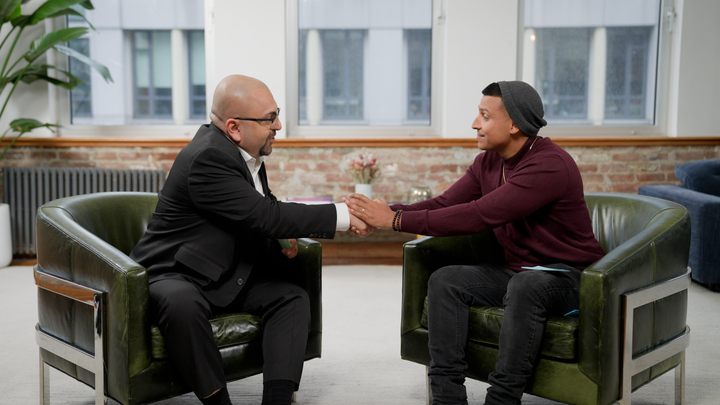
In this video, Ahmed Fouad Alkhatib and Yirmiyahu Danzig engage in an open, empathetic dialogue about the Israeli-Palestinian conflict, sharing their personal narratives and stories.
Essential Questions
- How can people with fundamentally different experiences of the same historical events engage in productive dialogue while still honoring their own narratives?
- What does it mean to be both a loyal advocate for one’s own community and a thoughtful critic of some of its actions or beliefs?
- How can recognizing the humanity and complexity of "the other side" coexist with maintaining strong convictions about justice and rights?
Big Ideas
- Beyond Binary Thinking: Complex conflicts require moving beyond "with us or against us" frameworks and embracing nuance, multiple perspectives, and the possibility of holding several truths simultaneously.
- Courageous Self-Reflection: Meaningful dialogue requires the willingness to examine and critique aspects of one's own community while still advocating for its fundamental rights and dignity.
- Shared Humanity in Difference: Recognizing common ground — such as shared hopes for safety, dignity, and self-determination — can coexist with acknowledging genuine disagreements about history, policy, and solutions.