
Faces of the Holocaust: The Victim

Resource: Video

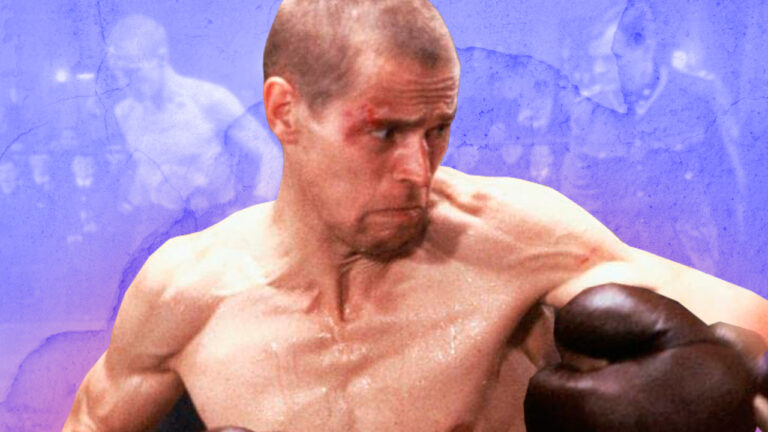
Explore the story of Salamo Arouch, a young Jewish boxer who was forced into brutal boxing matches staged by SS officers at Auschwitz, fighting not for a title but for his survival.

Essential Questions

  • How do personal stories of Holocaust victims help us understand the human impact of genocide?
  • In what ways did victims like Salamo Arouch resist dehumanization and preserve their identity?
  • Why is it important for survivors to share their stories and for future generations to carry them forward?

Big Ideas

  1. More Than A Number: Behind every number or statistic in the Holocaust is a person with a story of strength, loss, and endurance.
  2. Resilience Amid Horror: Even in unimaginable conditions, victims found ways to resist dehumanization and reclaim their dignity.
  3. The Legacy of Testimony: Survivors like Salamo Arouch carried the burden of memory, ensuring that future generations understand both the atrocities and the hope that followed.

Meet Salamo Arouch, a young Jewish boxer from Greece. He was the Balkan light-medium weight boxing champion with an unbeaten record. When the Nazis began deporting Jews in 1943, he never thought he would box again. But in a warehouse in Auschwitz, Salamo found himself back in the ring, in violent brutal matches staged to “entertain” the SS officers. No longer fighting for a title, he was fighting for his life. Use the accompanying questions and activities to deepen students’ understanding of the victim experience—highlighting the humanity and resilience of those targeted during the Holocaust.

How to use this guide
This guide is designed to enhance your students’ engagement with the video. You can explore the video together or utilize a flipped classroom approach, assigning the video (in full or in segments) for students to watch at home, then using class time to unpack ideas together through reflection, discussion, or hands-on activities. Choose the approach that best fits your students and classroom setting.

Discussion Questions

  1. Memorializing Victim’s Stories: Maya Angelou wrote in The New York Times in 1993, “History, despite its wrenching pain, cannot be unlived, but if faced with courage, need not be lived again.” How do you think Maya Angelou’s words apply to remembering the stories of victims of the Holocaust?
  2. The Victim Experience: During the Holocaust, Jews were the primary target of the Nazi regime, resulting in the systematic murder of six million Jewish people. While the majority of Holocaust victims were Jewish, the Nazis also persecuted and murdered other groups, including Roma and Sinti, people with disabilities, homosexuals, Jehovah’s Witnesses, and political dissidents. How should we balance emphasizing the Jewish experience of the Holocaust while also acknowledging and remembering the experiences of other victim groups?
  3. Intergenerational Trauma: Psychologists have studied the concept of intergenerational trauma, where the effects of trauma experienced by one generation can affect subsequent generations. Dr. Rachel Yehuda’s research even suggests that trauma can be transmitted genetically. How might the children and grandchildren of Holocaust survivors be affected by this intergenerational trauma? How does understanding these impacts change our perspective on the long-term effects of the Holocaust?

Learning Activities

  1. Gallery Walk: Prepare a gallery walk based on the U.S. Holocaust Memorial Museum’s “Behind Every Name a Story.” Students should silently walk around the room, read the stories of 5-10 victims, and journal their feelings. Then, the class should debrief their reactions.
  2. Mapping Jewish Resistance: There were many attempts at Jewish resistance through uprisings. Show this map of where Jewish resistance in ghettos and maps happened from 1941-1944. Each student should pick a different place and research the uprising that took place there, write a summary of what they learned, and then share what they learned with the class.
  1. Charles Krauthammer, Holocaust Museum
  2. New York Times, The Nazi-Fighting Women of the Jewish Resistance
  3. Scientific American, How Parents’ Trauma Leaves Biological Traces in Children by Rachel Yehuda
  4. United States Holocaust Memorial Museum, First Person Podcast Series
  5. Yale University, Fortunoff Video Archive for Holocaust Testimonies
  6. The Zekelman Holocaust Center (videos and resources):

Share link with students

STUDENT SIGN IN not required

https://www.youtube.com/watch?v=GIJPrAH7-kI

Download Educator’s Guide

All resources are available in PDF format for offline use in all settings.

Your download will open in a new window.

Download Lesson Plan

Use our ready-made lesson plan.
Your download will open in a new window.

See Transcript

Prepare your lesson with ease using the full transcript.

Download Video Source Sheet

Your download will open in a new window.

EdPuzzle

Test your students’ knowledge with an engaging EdPuzzle on this topic. (The link will open in a new window)

Unlock these resources with a free account

Sign up for a free account to access resources that help students explore diverse perspectives and gain a deeper understanding of complex issues.

GET STARTED FOR FREE

Already have an account?