
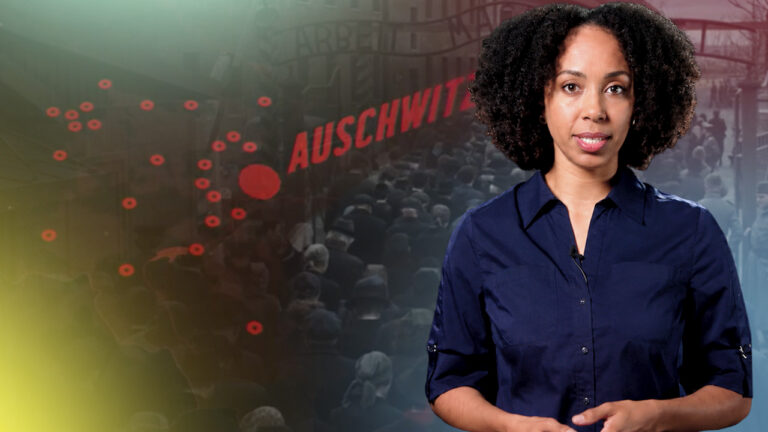
Learn how Auschwitz evolved into the largest Nazi camp complex, where millions were systematically dehumanized, forced into labor, and murdered during the Holocaust.
Essential Questions
- What was Auschwitz, and how did its structure as a system shape how the Nazis carried out mass murder?
- How did dehumanization function inside Auschwitz, and what did prisoners do to resist it?
- What does studying Auschwitz ask of us today: as learners, as citizens, and as human beings?
Big Ideas
- Auschwitz as System: Auschwitz was not one camp but an interconnected network of camps, labor sites, and killing centers — each part deliberate, each decision organized, each step building toward genocide on an industrial scale.
- Dehumanization and Resistance: The Nazis systematically stripped prisoners of their names, identities, and dignity. Even so, people found ways to resist — sharing food, preserving names, holding onto ritual, and in some cases taking direct action.
- Bearing Witness: Survivors like Elie Wiesel and Primo Levi put human faces on the scale of Auschwitz. Survivor testimony is not only a historical record, it is a moral charge to remember and to act.