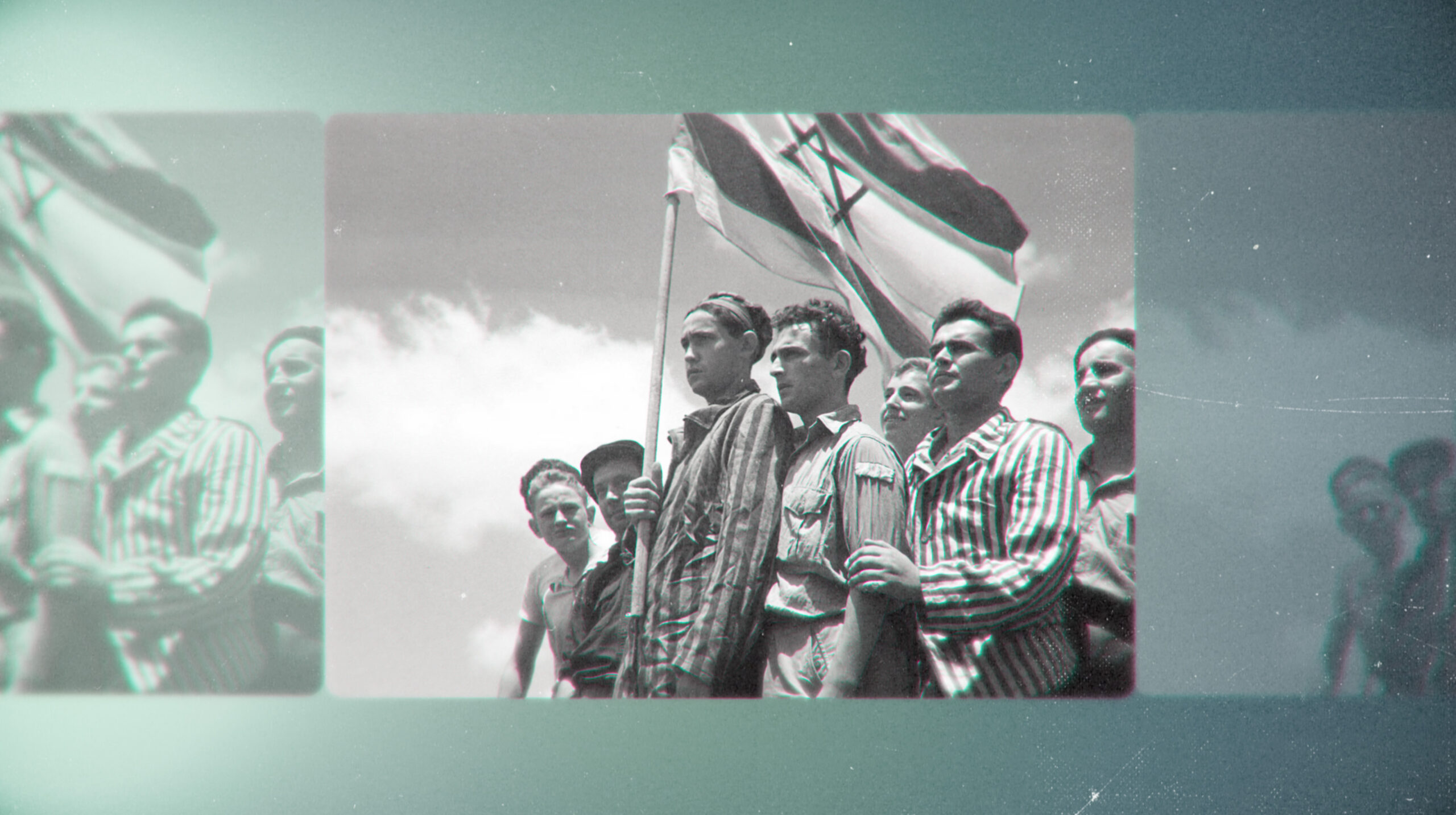
Teaching the Holocaust requires historical accuracy, age-appropriate instruction, and opportunities for students to engage with individual stories. Effective Holocaust education begins with Jewish life before the Holocaust, provides historical context, explores the progression from prejudice to genocide, and encourages thoughtful discussion about memory, responsibility, and human dignity.
Accomplishing all of that can be difficult in the limited time many educators have. According to the United States Holocaust Memorial Museum, many teachers spend the equivalent of just one or two class periods on Holocaust education, making it all the more important to use resources that balance historical rigor with meaningful classroom engagement.
Effective Holocaust education goes beyond dates and death tolls. It helps students understand the rich diversity of Jewish life before the Holocaust, including the communities, cultures, traditions, and everyday lives that were systematically destroyed. It also examines how antisemitism, discrimination, and dehumanization escalated over time, helping students understand not only what happened, but how an entire society came to accept and participate in genocide.
At ConnectED, our Holocaust curriculum and classroom-ready teaching resources, What Is the Holocaust?, provide a classroom-ready foundation that introduces students to the history, causes, and consequences of the Holocaust while centering Jewish life and identity before persecution and emphasizing the human stories behind the history.
What Does the Resource Cover?
The video provides a structured, classroom-ready overview of the Holocaust, tracing how centuries of antisemitism, the rise of Nazi Germany, and a series of escalating policies culminated in the systematic murder of six million Jews and millions of other victims. Rather than presenting the Holocaust as an isolated event, the lesson places it within its broader historical context while emphasizing the human stories behind the history. Students leave with a foundational understanding of how the Holocaust unfolded, why it happened, and why its lessons continue to matter today. Key topics include:
- Isolating European Jewry: Students examine how the Nazi regime systematically stripped Jews of their rights, livelihoods, and place in society through discriminatory laws, propaganda, and social exclusion. This section demonstrates that the Holocaust began long before the killing centers, as persecution gradually became normalized.
- Kristallnacht & the Intensification of Persecution: The video explores the November 1938 pogrom known as Kristallnacht and explains how this outbreak of state-sponsored violence marked a turning point in Nazi policy, accelerating the persecution of Jews throughout Germany and Austria.
- Barriers to Escape for Europe’s Jews: Students investigate why so many Jews were unable to flee Europe despite the growing danger. They examine restrictive immigration policies, international inaction, and the practical obstacles that trapped millions under Nazi rule.
- World War II & the Final Solution: The lesson traces how the outbreak of World War II transformed persecution into genocide. Students learn about ghettos, mass shootings, deportations, and the establishment of Nazi killing centers as part of the systematic implementation of the “Final Solution.”
- Non-Jewish Victims of the Holocaust: While the Holocaust primarily targeted Europe’s Jews, students also learn about the persecution and murder of other groups, including Roma and Sinti, people with disabilities, political prisoners, LGBTQ+ individuals, Jehovah’s Witnesses, and others whom the Nazi regime deemed undesirable.
- Resistance Efforts: The video concludes by highlighting the many forms of resistance during the Holocaust. Students explore armed uprisings alongside spiritual, cultural, and everyday acts of defiance that affirmed human dignity and challenged Nazi efforts to dehumanize their victims.
Six Best Practices for Teaching the Holocaust
- Begin with Jewish Life Before the Holocaust Help students understand the vibrant Jewish communities that existed across Europe before World War II. Beginning with Jewish life, culture, and identity ensures students recognize what was lost and avoids defining Jews solely through persecution.
- Teach the Historical Context Provide students with the broader context that made the Holocaust possible, including the rise of Nazi ideology, antisemitism, propaganda, and the political and social conditions of interwar Europe. Understanding the causes of the Holocaust is just as important as understanding its events.
- Show How Persecution Escalated Rather than presenting the Holocaust as a single event, trace its progression from discriminatory laws and social exclusion to Kristallnacht, ghettos, deportations, and the implementation of the “Final Solution.” This helps students see how genocide developed through a series of deliberate choices and policies.
- Center Individual Stories Pair historical facts with survivor testimony, diaries, photographs, and personal narratives. Individual stories help students understand the human impact of the Holocaust while emphasizing the resilience, choices, and lived experiences of those who endured it.
- Encourage Evidence-Based Discussion Invite students to analyze Holocaust primary sources, ask questions, and support their conclusions with historical evidence. Structured discussion helps students grapple with difficult history while developing critical thinking skills.
- Connect History to Contemporary Issues Carefully Encourage students to consider the Holocaust’s relevance today by discussing topics such as antisemitism, prejudice, and the responsibilities of individuals and societies. At the same time, avoid simplistic comparisons between the Holocaust and current events, helping students appreciate both the lessons of history and the uniqueness of the Holocaust.
Practical Tips & Strategies
- Start with Life, Not Tragedy: Before introducing the Holocaust, give students an opportunity to learn about Jewish life before World War II. Beginning with vibrant and diverse Jewish communities helps students understand what was destroyed rather than defining Jewish identity solely through persecution. This “Safely In, Safely Out” approach humanizes history before confronting its darkest chapters.
- Build Understanding Through Scaffolding: The Holocaust is best taught as a sequence rather than a single lesson. Begin with foundational knowledge, such as Jewish life before the Holocaust and an overview of the Holocaust itself, before introducing survivor testimony, key events like Kristallnacht, and broader questions about international responses. Building complexity over time helps students make meaningful historical connections instead of becoming overwhelmed by information.
- Move from Knowledge to Humanity: Historical facts are essential, but individual stories help students connect emotionally and intellectually with the past. Pair lessons about major events with survivor testimony, photographs, diaries, or personal narratives that illustrate how larger historical developments affected real people. This approach helps students see the Holocaust not only as a historical event, but as millions of individual human experiences.
A Sample from Our Curriculum
Below are examples of discussion questions and classroom activities designed to deepen students’ historical understanding while encouraging critical thinking, empathy, and evidence-based discussion.
Discussion Questions Include:
- What does resistance mean in the context of the Holocaust? Why would teaching children or keeping a diary be acts of resistance? How does each form of resistance assert humanity against dehumanization? Why resist when survival or victory seems impossible? How do we honor both those who resisted and those who couldn’t?
- The Holocaust was an organized, planned, bureaucratic genocide carried out through business meetings, train schedules, and factory-like efficiency. What’s more frightening: violence that looks obviously monstrous, or violence that looks ordinary? At what point in the progression from prejudice to genocide could it have been stopped—and what would that have required?
- The video emphasizes, “While the Nazis directed the Holocaust, they didn’t act alone.” What’s the difference between sympathy and action? When does inaction become complicity? What responsibility did other nations and ordinary people have? How did international indifference enable genocide? Where’s the line between perpetrator, collaborator, and bystander?
Learning Activities Include:
Jewish Life and Resistance in the Ghettos Case Study
- Students work in small groups to investigate daily life in ghettos such as Warsaw, Łódź, or Kraków. Each group researches the ghetto’s population, size, and timeline, examines living conditions, explores examples of both spiritual and armed resistance, and highlights two or three individual stories that illustrate everyday life under Nazi rule. By focusing on one community in depth, students gain a more personal understanding of how Jewish people maintained their humanity and resisted despite impossible circumstances.
Interactive Holocaust Timeline
- Students organize key events from the Holocaust into chronological order, helping them understand how persecution escalated over time rather than occurring all at once. As an extension, each group can research several events from the timeline and present them to the class, reinforcing the historical sequence while encouraging students to explain how each event contributed to the broader progression of the Holocaust.