
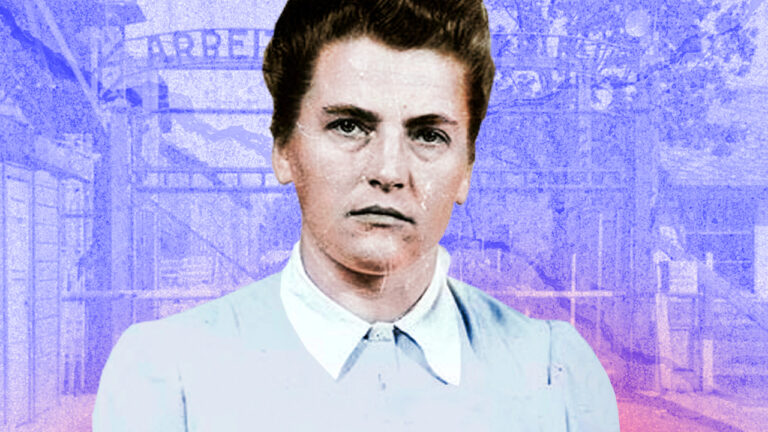
Explore the role of the perpetrator during the Holocaust through the story of Maria Mandl, a small-town girl who rose to the top ranks of the SS in a concentration camp, drawn by the Nazi party’s promise of stability and upward mobility.
Essential Questions
- What motivates individuals to participate in systems of violence and oppression?
- How does power shape the choices people make and how they justify them?
- Why is it critical to study the lives and actions of perpetrators, not just victims and heroes?
Big Ideas
- The Banality of Evil: Perpetrators are not always monsters in appearance, they are often ordinary people who choose cruelty over conscience.
- Power and Dehumanization: When cruelty is rewarded, it can become a path to power, especially in systems built on violence and oppression.
- Excuses, Denial, and the Myth of Ignorance: History shows how individuals and societies justify horrific actions to protect themselves from accountability.