
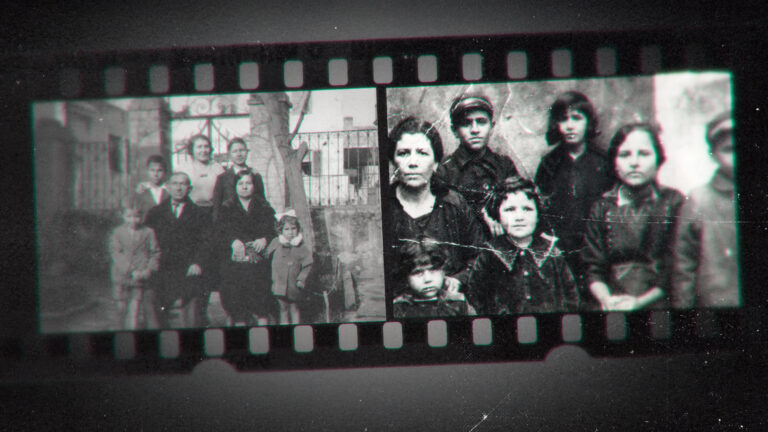
Jewish Life Before the Holocaust

Resource: Video

Journey through Jewish Vienna, Salonika, and Buczacz, once-vibrant communities where learning, culture, and tradition flourished for centuries before the Holocaust.

Essential Questions

  • How does geography and location shape the development and experiences of its residents?
  • How did Jewish communities maintain religious and cultural identity while adapting to local languages, customs, and opportunities? 
  • What role did education, religion, and social organizations play in sustaining Jewish life across generations?

Big Ideas

  1. Identity: Across history, Jewish communities adapted to their environments and created diverse cultures, all while staying connected through shared traditions and values. 
  2. Diversity Within Unity: Jewish life in Europe was extraordinarily diverse, from different languages, customs, economics, political views, and levels of religious observance, yet all communities were connected by shared traditions, holidays, and historical memory. 
  3. Resilience and Antisemitism: Despite the persistent threat of discrimination and antisemitism, Jewish life thrived and Jewish communities created vibrant intellectual and cultural life.

Before we explore what was lost during the Holocaust, we first need to understand what existed. When we think about Jewish life in Europe before World War II, it’s easy to imagine a single, uniform experience. But the reality was far more complex and diverse.

These videos and accompanying curriculum highlight three very different Jewish communities: Salonika in Greece, Buczacz in what is now Ukraine, and Vienna in Austria. Each represents a different facet of European Jewish civilization – a bustling Sephardic port city, a traditional Eastern European town, and a cosmopolitan capital. By examining each video, students will learn that there was no single “European Jewish experience”. There were thousands of distinct communities, each shaped by their unique place in the complex geography of European empires, nations, and cultures.

How to use this guide
This guide is designed to enhance your students’ engagement with these three explorations of Jewish life before the Holocaust. Choose the approach that best fits your students and classroom setting, whether it’s real-time engagement to process the diversity as it unfolds, a deeper comparative analysis after learning about all three communities, or a Jigsaw approach where students can revisit specific communities that particularly interest them.

The goal is to help students recognize that European Jewish life was not monolithic, but rather a rich tapestry of distinct communities, each shaped by their unique geographic, political, and cultural contexts.

Discussion Questions: 

  1. Understanding Diversity in the Jewish Diaspora 
    • How does understanding the diversity and complexity of prewar Jewish life challenge simplified narratives about Jewish identity or the Holocaust?
    • Which aspect of Jewish diversity surprised you most, and why?
  2. Identity and Geography
    • How did geographic settings shape Jewish identity differently in each location? Consider Vienna, Salonika, and Buczacz?
    • If you had to move to a completely different country with a different language and culture, what aspects of your identity would be most important for you to preserve? What might you be willing to adapt or change?

Learning Activities: 

  1. During Viewing: Observation Charts
    Create a handout where students take notes on Vienna | Buczacz | Salonika as they watch each video. Ask students to focus on categories to track: daily life, language, religious practices, architecture, occupations, relationships with non-Jewish communities.
  2. Community Profiles
    Using Canva or drawing by hand, ask students to create one-page “profiles” of each city, focusing on key characteristics:

    • Population/size
    • Languages
    • Economic roles
    • Religious diversity
    • Notable institutions
    • Impact of Antisemitism/the Holocaust
    • Legacy of Jewish life today
  3. Museum Exhibition
    In small groups, ask students to create a virtual museum exhibit on one of the three communities. Students should include 5 objects/images and include a brief description about how each relates to Jewish life in that community before WWII.

Download Educator’s Guide

All resources are available in PDF format for offline use in all settings.

Your download will open in a new window.

See Transcript

Prepare your lesson with ease using the full transcript.

Download Video Source Sheet

Your download will open in a new window.

Get Teaching Tips

Watch this brief webinar for practical strategies to engage your students.

Share link with students

STUDENT SIGN IN not required

https://www.youtube.com/watch?v=rTgoRtPufG0

Unlock these resources with a free account

Sign up for a free account to access resources that help students explore diverse perspectives and gain a deeper understanding of complex issues.

GET STARTED FOR FREE

Already have an account?